
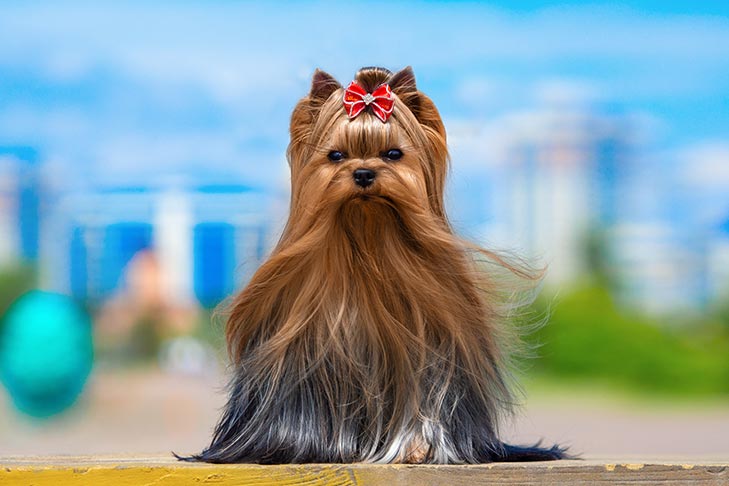
Are Yorkshire Terriers Easy to Train?
Yorkshire Terriers score a solid 4 out of 5 for trainability, making them quite capable learners when approached correctly. Their intelligence and eagerness to please work in your favor, but their independent streak can present challenges.
What most owners don't realize is that Yorkies were originally bred to hunt rats and vermin in textile mills. This working background means they're naturally alert and responsive to training cues. However, their feisty temperament can sometimes translate into stubbornness during training sessions.
The key to success lies in understanding that Yorkshire Terriers respond best to consistent, patient training methods. Their small size doesn't mean they need less structure — quite the opposite. These tiny dogs often develop "small dog syndrome" without proper boundaries and training from day one.
Best Training Methods for Yorkshire Terriers
Positive reinforcement is absolutely essential when training Yorkshire Terriers. These sensitive dogs shut down quickly with harsh corrections or negative training methods. Instead, focus on reward-based training using high-value treats, praise, and play.
Yorkshire Terriers are highly food-motivated, making treat-based training particularly effective. Use small, soft treats that can be consumed quickly without disrupting the training flow. Since Yorkies only weigh around 7 pounds, even tiny treats feel significant to them.
Keep training sessions short and engaging — 5 to 10 minutes maximum. Yorkshire Terriers have high energy levels but can become overwhelmed or lose focus during lengthy sessions. Multiple short sessions throughout the day work much better than one long training period.
Consistency is crucial with this breed. Yorkshire Terriers are smart enough to test boundaries and will quickly learn if rules aren't consistently enforced. Every family member needs to use the same commands and expectations.
- Use high-value, small treats for motivation
- Keep sessions to 5-10 minutes maximum
- Practice multiple short sessions daily
- Maintain consistent rules across all family members
- Focus on positive reinforcement only
Yorkshire Terrier Puppy Training Essentials
Start training your Yorkshire Terrier puppy the moment they arrive home. Their intelligence means they're absorbing information constantly, so early training sets the foundation for lifelong good behavior.
House training requires extra patience with Yorkshire Terriers due to their tiny bladders. Most Yorkies need to eliminate every 2-3 hours as puppies. Crate training works well for this breed, as they appreciate having a secure den space. Choose a crate appropriately sized for their adult weight of 7 pounds.
Basic obedience commands should be introduced early. Start with "sit," "stay," and "come" — commands that help establish your leadership and keep your tiny dog safe. Yorkshire Terriers can be surprisingly quick to dart away, so a reliable recall command is essential.
Socialization is critical during the puppy phase. Expose your Yorkshire Terrier to various people, sounds, and experiences in a positive way. However, be mindful of their size around larger dogs and supervise all interactions carefully.
- Begin house training with frequent potty breaks every 2-3 hours
- Use appropriately sized crates for security and house training
- Teach basic commands: sit, stay, come, down
- Socialize carefully with size-appropriate interactions
- Start leash training early with a harness, not a collar
Common Yorkshire Terrier Behavior Challenges
Yorkshire Terriers score 4 out of 5 for barking tendency, making excessive vocalization one of the most common training challenges. These alert little dogs bark at everything — visitors, other dogs, strange sounds, and sometimes just for attention.
Their high energy levels (4 out of 5) can lead to destructive behaviors if not properly channeled. Without adequate mental and physical stimulation, Yorkshire Terriers may chew furniture, dig, or become hyperactive indoors. Daily walks and interactive toys help manage their energy needs.
Resource guarding can develop in Yorkshire Terriers, especially around food or favorite toys. Their independent nature sometimes manifests as possessiveness. Address this early by teaching "drop it" and "leave it" commands while rewarding calm behavior around resources.
Separation anxiety is another common issue with this breed. Yorkshire Terriers form strong bonds with their owners and can become distressed when left alone. Gradual desensitization to alone time, starting with very short periods, helps prevent this problem from developing.
- Address excessive barking with "quiet" command training
- Provide adequate exercise despite their small size
- Prevent resource guarding with early "drop it" training
- Gradually build tolerance for alone time
- Channel energy into appropriate activities and toys
Professional Training for Yorkshire Terriers
Ready to take your Yorkshire Terrier's training to the next level? Explore structured training programs designed specifically for small breeds like yours.
Socialization Tips for Yorkshire Terriers
Yorkshire Terriers score 5 out of 5 for compatibility with children, but their small size requires careful supervision during interactions. Teach children how to properly handle and interact with a tiny dog to prevent accidental injuries.
With other dogs, Yorkshire Terriers score 3 out of 5, indicating they can be selective about canine companions. Early socialization helps, but always supervise interactions with larger dogs. Many Yorkies don't realize their size limitations and may challenge much bigger dogs.
Expose your Yorkshire Terrier to various environments gradually. Start with quiet settings and slowly introduce busier areas as their confidence grows. Their alert nature means they can become overwhelmed in chaotic environments without proper preparation.
Puppy classes specifically designed for small breeds work well for Yorkshire Terriers. These controlled environments allow safe socialization with appropriately sized playmates while learning basic obedience skills.