
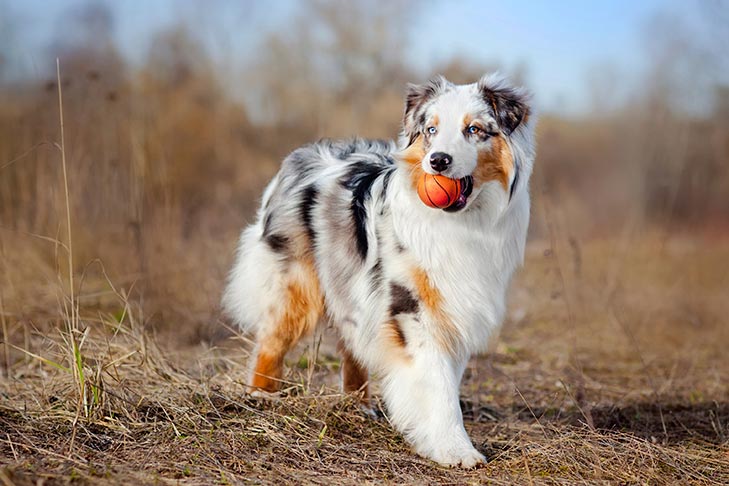
Understanding Your Australian Shepherd's Coat
Australian Shepherds sport a gorgeous double coat that's both functional and beautiful. The outer coat is medium-length and slightly wavy, while the dense undercoat provides insulation and weather protection.
With a shedding score of 3 out of 5, Australian Shepherds are moderate shedders year-round. You'll notice increased shedding during seasonal changes, typically spring and fall, when they "blow" their undercoat.
The good news? Their grooming needs score of just 2 out of 5 means they're relatively low-maintenance compared to other double-coated breeds. Regular brushing and basic care will keep your Aussie looking their best without requiring professional grooming every few weeks.
Brushing Your Australian Shepherd
Here's the thing about Australian Shepherds: consistent brushing prevents matting and reduces the tumbleweeds of fur rolling around your house. Aim to brush your Aussie 2-3 times per week during normal shedding periods.
During seasonal shedding periods, daily brushing becomes essential. You'll notice loose undercoat coming out in clumps, and this is completely normal. A slicker brush works best for removing loose undercoat, while a pin brush helps smooth the outer coat.
Start brushing from the legs up, working in sections. Pay special attention to areas prone to matting: behind the ears, under the legs, the chest, and the rear end. Always brush in the direction of hair growth, then against it to catch loose undercoat.
What most owners don't realize is that wet brushing can damage the coat. Always brush when the coat is completely dry, or use a light detangling spray if needed.
Bathing Your Australian Shepherd
Australian Shepherds need baths every 6-8 weeks under normal circumstances. Their double coat naturally repels dirt and debris, so over-bathing can strip essential oils and cause skin irritation.
You'll want to increase bathing frequency if your Aussie gets into something messy or develops that distinct "doggy smell." Active outdoor dogs may need monthly baths, especially during muddy seasons.
Always brush thoroughly before bathing to remove loose hair and prevent matting when wet. Use lukewarm water and work shampoo through the coat systematically. The dense undercoat requires extra attention to ensure complete rinsing.
Proper drying is crucial for Australian Shepherds. Towel dry first, then use a blow dryer on cool setting while brushing. Never let the undercoat air-dry completely, as this can lead to hot spots and skin issues.
Essential Care: Nails, Ears, and Teeth
Beyond coat care, your Australian Shepherd needs regular attention to nails, ears, and teeth. These active dogs typically wear down their nails naturally, but indoor dogs need trimming every 3-4 weeks.
Australian Shepherds' triangular, semi-erect ears require weekly cleaning to prevent infections. Their ear shape allows good air circulation, but debris and wax can still accumulate.
Dental care becomes increasingly important as your Aussie ages. Daily brushing prevents tartar buildup and maintains fresh breath, while dental chews provide additional cleaning action.
- Trim nails when you hear clicking on hard floors
- Clean ears weekly with vet-approved solution
- Brush teeth daily or provide dental chews
- Check paws for cuts, thorns, or ice balls between toes
- Inspect coat for burrs, ticks, or skin irritation after outdoor activities
Professional Grooming for Australian Shepherds
Most Australian Shepherd owners can handle grooming at home, but professional services offer valuable benefits. A professional groomer every 8-12 weeks can maintain coat health and catch potential issues early.
Professional groomers excel at thorough undercoat removal, nail trimming, and sanitary trims around sensitive areas. They can also provide breed-specific cuts that maintain the Aussie's natural appearance while improving manageability.
Expect to pay $60-100 for professional grooming, depending on your location and services included. Many owners use professional grooming seasonally during heavy shedding periods, then maintain the coat at home.
Never request a full shave for your Australian Shepherd unless medically necessary. Their double coat regulates temperature and protects from UV rays. Shaving can permanently damage coat texture and color.
Essential Grooming Tools for Australian Shepherds
The right tools make Australian Shepherd grooming efficient and enjoyable for both of you. A high-quality slicker brush removes loose undercoat effectively, while a pin brush smooths the outer coat.
An undercoat rake becomes invaluable during shedding season. This tool reaches through the outer coat to remove loose undercoat without damaging guard hairs. Use it 1-2 times per week during peak shedding.
For bathing, choose a gentle, moisturizing dog shampoo formulated for double coats. Avoid human products, which can disrupt the skin's pH balance. A high-velocity dryer speeds drying time and helps remove additional loose hair.
Nail clippers, ear cleaning solution, and a dog toothbrush round out your essential kit. Quality tools last longer and work more effectively, making them worth the investment for regular grooming.
Australian Shepherd Grooming Schedule
| Task | Frequency | Notes |
|---|---|---|
| Brushing | 2-3x per week | Daily during shedding season |
| Bathing | Every 6-8 weeks | More often if needed |
| Nail trimming | Every 3-4 weeks | When you hear clicking |
| Ear cleaning | Weekly | Check for debris or odor |
| Teeth brushing | Daily | Minimum 3x per week |
| Professional grooming | Every 8-12 weeks | Optional but beneficial |
Grooming Essentials for Australian Shepherds
Keep your Aussie looking their best with the right grooming tools. From slicker brushes to undercoat rakes, we've curated the essential items for Australian Shepherd care.