
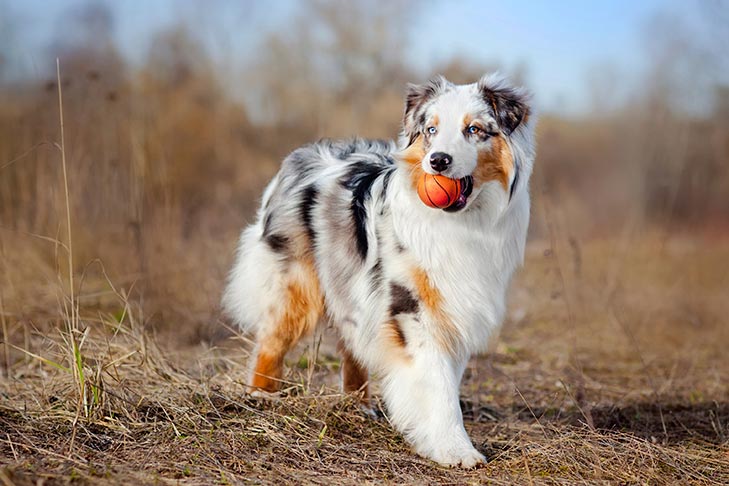
About the Australian Shepherd
The Australian Shepherd, affectionately known as the Aussie, is actually a breed developed in California during the 19th century — making their name a bit of a misnomer. Despite their misleading moniker, these dogs were bred specifically for herding livestock in the American West.
What most owners don't realize is that Australian Shepherds are incredibly versatile working dogs with an intense drive to please. They're built for endurance and intelligence, standing 20-23 inches tall and weighing 50-65 pounds of pure athletic ability.
Currently ranking as the 12th most popular breed, Aussies have captured hearts with their striking coats and unwavering loyalty. They're the type of dog that forms an unbreakable bond with their family while maintaining the work ethic of their herding heritage.
Here's the thing about Australian Shepherds — they're not just pets, they're partners. Whether you need a jogging companion, a family guardian, or a dog sport teammate, these intelligent herders rise to meet every challenge with enthusiasm.
Energy Level
Extremely High
Trainability
Excellent
Family Dog
Outstanding
Shedding
Moderate
Barking
Moderate
Size
Medium-Large
Australian Shepherd Temperament & Personality
Australian Shepherds are intelligent, loyal, and incredibly energetic dogs with a strong herding instinct. They're naturally protective of their family while being gentle and patient with children. You'll notice that Aussies thrive on having a job to do and can become restless without proper mental stimulation.
🧠Highly Intelligent
Australian Shepherds are problem-solvers who learn commands quickly and remember them forever. They excel at reading situations and anticipating their owner's needs. This intelligence means they need mental challenges to stay happy and well-behaved.
🏃Energetic Worker
These dogs were bred for all-day work and have energy to match. They need substantial daily exercise and mental stimulation to prevent destructive behaviors. A tired Aussie is a happy Aussie — and a happy owner.
👨👩👧👦Family Devoted
Australian Shepherds form incredibly strong bonds with their families and are naturally protective. They're gentle and patient with children, often displaying their herding instincts by gently guiding kids. Their loyalty runs deep and they prefer to be wherever their people are.
🐕Herding Instinct
You'll notice your Aussie may try to herd children, other pets, or even adults by gently nipping at heels. This instinct is deeply ingrained and requires proper training to manage. They're naturally alert and make excellent watchdogs.
🤝Eager to Please
Australian Shepherds live to make their owners happy and respond beautifully to positive reinforcement. They're sensitive dogs who pick up on emotions and adjust their behavior accordingly. This trait makes them excellent therapy and service dogs when properly trained.
Australian Shepherd Grooming Needs
Australian Shepherds have a double coat that sheds moderately year-round with heavier shedding seasons twice a year. Their beautiful coat requires regular brushing 2-3 times per week to prevent matting and reduce loose hair around your home. During shedding seasons, daily brushing becomes essential to manage the increased hair loss. The good news is that their coat is naturally dirt-resistant and doesn't require frequent baths unless they've gotten into something messy.
Full Grooming Guide →Australian Shepherd Health & Lifespan
Australian Shepherds are generally healthy dogs with a lifespan of 12-15 years. Like most herding breeds, they can be prone to certain genetic conditions that responsible breeding helps minimize. Regular vet checkups and maintaining a healthy weight are key to ensuring your Aussie lives a long, active life.
- ⚠️Hip DysplasiaA genetic condition where the hip joint doesn't develop properly, leading to arthritis and mobility issues. Symptoms include difficulty rising, reluctance to jump, and altered gait. Talk to your vet if you notice these symptoms.
- ⚠️Progressive Retinal AtrophyAn inherited eye condition that gradually leads to vision loss and eventual blindness. Early signs include night blindness and bumping into objects in dim light. Talk to your vet if you notice these symptoms.
- ⚠️EpilepsyAustralian Shepherds can be prone to seizure disorders that typically appear between 6 months and 6 years of age. Seizures can range from mild to severe and require immediate veterinary attention. Talk to your vet if you notice these symptoms.
- ⚠️MDR1 Gene MutationA genetic condition that makes some Aussies sensitive to certain medications, particularly ivermectin and related drugs. This can cause severe neurological reactions if not properly managed. Talk to your vet if you notice these symptoms.
- ⚠️Elbow DysplasiaSimilar to hip dysplasia, this condition affects the elbow joint and can cause lameness and arthritis. Symptoms include limping, stiffness after rest, and reluctance to exercise. Talk to your vet if you notice these symptoms.
Feeding Your Australian Shepherd
Australian Shepherds need high-quality dog food that matches their high energy levels and medium-large size (50-65 pounds). Active adult Aussies typically require 2-3 cups of premium dry food daily, divided into two meals to prevent bloat. Their nutritional needs will vary based on age, activity level, and individual metabolism, so working with your vet to establish the right feeding plan is essential. What most owners don't realize is that these athletic dogs may need more calories during peak activity seasons or if they're working dogs.
Full Feeding Guide →Australian Shepherd Exercise Needs
With an energy score of 5 out of 5, Australian Shepherds need substantial daily exercise — we're talking 2+ hours of physical and mental activity. These aren't dogs that will be satisfied with a simple walk around the block; they need running, hiking, agility training, or other high-intensity activities. You'll notice that a well-exercised Aussie is calm and content indoors, while an under-exercised one can become destructive and anxious. Mental stimulation through puzzle toys, training sessions, and dog sports is just as important as physical exercise for this intelligent breed.
Training Tips →