
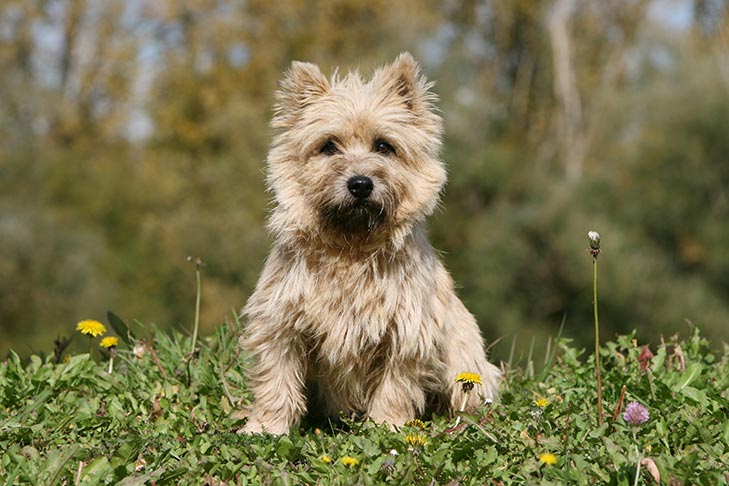
About the Cairn Terrier
The Cairn Terrier is a terrier breed originating in the Scottish Highlands and recognised as one of Scotland's earliest working dogs. These sturdy little terriers were bred to work among the rocky cairns of Scotland, hunting vermin and small game.
Originally shown as "Short-haired Skye terriers" in 1909, the breed faced opposition from Skye Terrier breeders. The compromise name "Cairn Terrier" was adopted and officially recognized by the Kennel Club.
Today, Cairn Terriers are beloved family companions who retain their working terrier spirit. They're compact at 10 inches tall and 14 pounds, making them perfect for both city and country living.
What most owners don't realize is that these dogs still carry the bold, independent nature that made them excellent working dogs in the Scottish Highlands.
Size
Small (14 lbs, 10 inches)
Energy Level
Moderate
Shedding
Low
Barking
Frequent
Trainability
Moderate
Lifespan
14-16 years
Cairn Terrier Temperament & Personality
Cairn Terriers are spirited, independent dogs with a bold terrier personality. They're alert and confident, making them excellent watchdogs despite their small size.
🦁Bold & Fearless
These little terriers have big personalities and aren't easily intimidated. Their courage was essential for their original work hunting in rocky Scottish terrain.
🔍Alert & Curious
Cairn Terriers are naturally inquisitive and make excellent watchdogs. They'll alert you to visitors and unusual sounds with their characteristic bark.
🎯Independent Minded
True to their terrier heritage, Cairns can be somewhat stubborn and like to think for themselves. This independence requires patient, consistent training.
❤️Loyal Companion
While independent, Cairn Terriers form strong bonds with their families. They're affectionate dogs who enjoy being part of household activities.
Cairn Terrier Grooming Needs
Cairn Terriers have low shedding needs, making them relatively easy to maintain. Their weather-resistant double coat requires regular brushing to prevent matting and maintain its natural texture. Weekly brushing sessions will keep their coat healthy and remove loose hair. Professional grooming every 6-8 weeks helps maintain their characteristic scruffy terrier appearance.
Full Grooming Guide →Cairn Terrier Health & Lifespan
Cairn Terriers are generally healthy dogs with a lifespan of 14-16 years. Like many small terrier breeds, they can be prone to certain genetic conditions that responsible breeding helps minimize.
- ⚠️Luxating PatellaThis condition involves the kneecap dislocating from its normal position, common in small breeds. You may notice your dog skipping or holding up a hind leg. Talk to your vet if you notice symptoms.
- ⚠️Progressive Retinal AtrophyThis inherited eye condition can lead to vision loss over time. Regular eye exams can help detect early signs of this condition. Talk to your vet if you notice symptoms.
- ⚠️Hip DysplasiaThough less common in small breeds, hip dysplasia can still affect Cairn Terriers. Signs include difficulty rising, limping, or reluctance to exercise. Talk to your vet if you notice symptoms.
- ⚠️AllergiesCairn Terriers can develop food or environmental allergies causing skin irritation and itching. Symptoms include excessive scratching, licking, or skin redness. Talk to your vet if you notice symptoms.
Feeding Your Cairn Terrier
At 14 pounds with moderate energy levels, Cairn Terriers need high-quality food appropriate for small breeds. Their compact size means they require smaller kibble and controlled portions to prevent weight gain. Small dogs have faster metabolisms, so they often do well with two meals per day rather than one large meal. Choose a formula designed for small breeds to ensure proper nutrition density for their size.
Full Feeding Guide →Cairn Terrier Exercise Needs
With a moderate energy level, Cairn Terriers need daily exercise but aren't overly demanding. A couple of walks per day plus some playtime will keep them happy and healthy. Their terrier instincts mean they enjoy games that challenge their minds as much as their bodies. Mental stimulation through puzzle toys and training sessions is just as important as physical exercise for this intelligent breed.
Training Tips →