
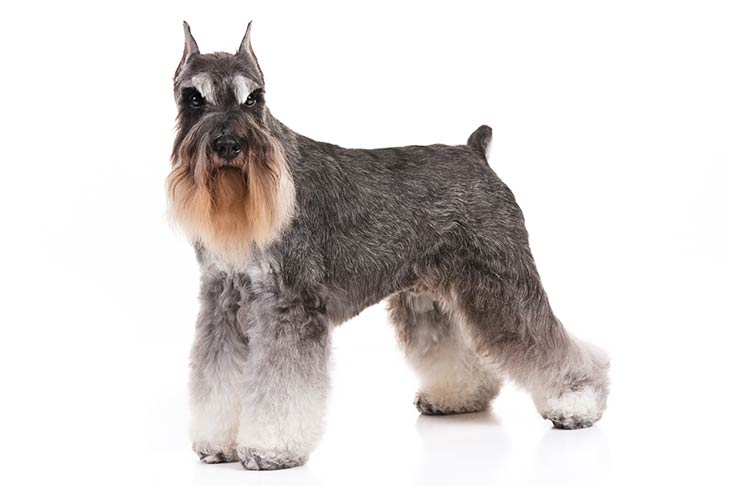
About the Miniature Schnauzer
The Miniature Schnauzer originated in Germany in the late 19th century, developed as a smaller version of the Standard Schnauzer. These compact terriers were bred to be farm dogs and ratters, combining the alertness of a watchdog with the size perfect for family life.
What makes Miniature Schnauzers stand out is their distinctive wiry double coat and expressive eyebrows that give them an almost human-like expression. They come in a variety of colors and have that classic Schnauzer look that's both dignified and charming.
As the 17th most popular dog breed, Miniature Schnauzers have won over families with their intelligence and devotion. They're alert watchdogs who form strong bonds with their owners, making them excellent companions for those who want a small dog with a big personality.
Here's the thing about Miniature Schnauzers — they pack a lot of character into their 11-20 pound frame. Standing 12-14 inches tall, they're the perfect size for apartment living while still being sturdy enough for active families.
Trainability
Highly intelligent and eager to please
Family-Friendly
Excellent with children of all ages
Watchdog
Alert barkers who notice everything
Grooming
Regular professional grooming needed
Energy Level
Moderate exercise needs
Social
Selective with other dogs
Miniature Schnauzer Temperament & Personality
Miniature Schnauzers are intelligent, alert, and devoted companions who form strong bonds with their families. They're naturally suspicious of strangers, making them excellent watchdogs, but warm and affectionate with their loved ones.
🧠Highly Intelligent
Miniature Schnauzers are quick learners who excel in training. Their high intelligence means they need mental stimulation to prevent boredom and destructive behaviors.
👨👩👧👦Family Devoted
These dogs form incredibly strong bonds with their families and are especially good with children. They're loyal companions who want to be involved in everything their family does.
🚨Alert Watchdog
You'll notice that Miniature Schnauzers are always on duty, watching for anything unusual. They're excellent alarm systems who will bark to alert you of visitors or suspicious activity.
⚡Spirited & Active
Despite their small size, these terriers have plenty of energy and spirit. They enjoy games, walks, and activities that challenge both their body and mind.
🎯Strong-Willed
Like many terriers, Miniature Schnauzers can be independent thinkers. Consistent, positive training from an early age helps channel their strong personality in the right direction.
Miniature Schnauzer Grooming Needs
Miniature Schnauzers have moderate to high grooming needs due to their wiry double coat that doesn't shed much but requires regular professional attention. Their distinctive beard and eyebrows need daily brushing to prevent matting, and most owners take them to a groomer every 6-8 weeks. The good news is their low shedding score of 3 out of 5 means less hair around your house, but you'll need to budget for regular grooming appointments.
Full Grooming Guide →Miniature Schnauzer Health & Lifespan
Miniature Schnauzers are generally healthy dogs with a lifespan of 12-15 years. Like most small breeds, they can be prone to certain health conditions, but with proper care and regular vet checkups, most live long, healthy lives.
- ⚠️PancreatitisMiniature Schnauzers are prone to pancreatitis, especially if they eat high-fat foods. Symptoms include vomiting, loss of appetite, and abdominal pain. Talk to your vet if you notice these symptoms.
- ⚠️Bladder StonesThis breed can develop bladder stones, which may cause difficulty urinating or blood in the urine. Regular vet checkups can help catch this condition early. Talk to your vet if you notice changes in urination habits.
- ⚠️Eye ProblemsProgressive retinal atrophy and cataracts can affect Miniature Schnauzers as they age. Watch for signs like bumping into objects or reluctance to go outside at night. Talk to your vet if you notice vision changes.
- ⚠️DiabetesSmall breeds like Miniature Schnauzers can develop diabetes, especially if overweight. Symptoms include excessive thirst, frequent urination, and weight loss despite good appetite. Talk to your vet if you notice these symptoms.
Feeding Your Miniature Schnauzer
Miniature Schnauzers need a high-quality diet appropriate for their small size and moderate energy level. At 11-20 pounds, they don't need huge portions, but they do need nutrient-dense food to fuel their active lifestyle. What most owners don't realize is that this breed is prone to pancreatitis, so avoiding high-fat foods and treats is crucial. Feeding smaller, more frequent meals can help prevent bloat and maintain steady energy levels throughout the day.
Full Feeding Guide →Miniature Schnauzer Exercise Needs
With a moderate energy score of 3 out of 5, Miniature Schnauzers need daily exercise but aren't marathon runners. A couple of good walks, some playtime, and mental stimulation will keep them happy and healthy. Their terrier heritage means they enjoy activities that challenge their minds as much as their bodies. You'll notice that a tired Miniature Schnauzer is a well-behaved Miniature Schnauzer, so don't skip their daily exercise routine.
Training Tips →