
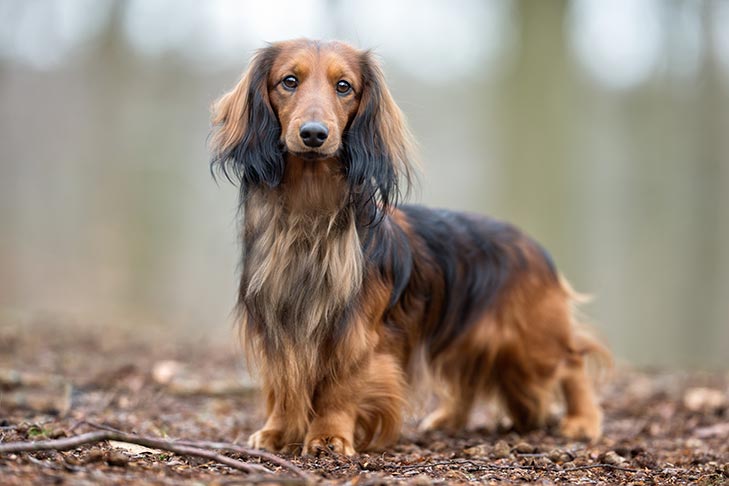
About the Dachshund
The Dachshund, affectionately known as the "wiener dog" or "sausage dog," is a German breed instantly recognizable by their long body and short legs. Originally bred to hunt badgers in their burrows, these fearless hounds were designed for a specific job that required courage and determination.
What most owners don't realize is that Dachshunds come in three coat varieties: smooth, wire-haired, and long-haired, each with their own grooming needs. The miniature variety was developed to hunt smaller prey like rabbits, making them perfect for different hunting scenarios.
Today's Dachshunds have traded badger hunting for family life, ranking as the 9th most popular dog breed. Their bold personality packed into a compact frame makes them excellent companions for those who appreciate a dog with attitude and intelligence.
Here's the thing about Dachshunds: they may be small in stature, but they have the heart of a much larger dog. Their hound heritage means they're naturally curious and can be quite vocal when something catches their attention.
Barking Level
Very High (5/5)
Trainability
Good (4/5)
Energy Level
Moderate (3/5)
Good with Dogs
Good (4/5)
Child Friendly
Moderate (3/5)
Shedding
Low (2/5)
Dachshund Temperament & Personality
Dachshunds are bold, confident dogs with a fearless attitude that often surprises people given their size. Their hound heritage gives them a strong prey drive and natural curiosity about their surroundings. You'll notice they can be quite independent thinkers, which sometimes translates to stubbornness during training.
🦁Brave & Bold
Despite their small size, Dachshunds have the courage of a lion. They were bred to face badgers in underground burrows, so they naturally possess fearlessness that can sometimes get them into trouble with much larger dogs.
🔍Curious & Alert
Their hound instincts make them naturally inquisitive about everything around them. You'll find your Dachshund investigating every new smell, sound, or visitor with intense focus and determination.
💭Independent Thinker
Dachshunds are intelligent dogs who like to make their own decisions. This independent streak can make training challenging at times, but it also means they're excellent problem solvers when motivated.
👨👩👧👦Loyal Family Dog
Once they bond with their family, Dachshunds are incredibly devoted companions. They often choose a favorite person but will show affection to all family members, though they can be reserved with strangers initially.
Dachshund Grooming Needs
With a low shedding score of 2 out of 5, Dachshunds are relatively easy to maintain depending on their coat type. Smooth-haired varieties need minimal brushing, while long-haired Dachshunds require more frequent attention to prevent matting. Wire-haired varieties benefit from occasional hand-stripping to maintain their coat texture. Regular nail trims are especially important due to their low-to-ground build, and their long ears need weekly cleaning to prevent infections.
Full Grooming Guide →Dachshund Health & Lifespan
Dachshunds typically live 12-15 years and are generally healthy dogs, but their unique body structure does predispose them to certain conditions. Their long spine and short legs make them particularly vulnerable to back problems, which is the most significant health concern for the breed. Regular vet checkups and maintaining a healthy weight are crucial for preventing many health issues.
- ⚠️Intervertebral Disc Disease (IVDD)The most common health issue in Dachshunds, IVDD occurs when the discs between vertebrae herniate or rupture, potentially causing pain, weakness, or paralysis. Their long spine puts extra stress on these discs throughout their lifetime. Talk to your vet if you notice back pain, reluctance to jump, or changes in mobility.
- ⚠️ObesityExtra weight puts additional strain on a Dachshund's already vulnerable spine and can worsen back problems. Their love of food and relatively low exercise needs make weight management challenging but crucial. Talk to your vet about proper portion sizes and body condition scoring.
- ⚠️Progressive Retinal Atrophy (PRA)This hereditary eye condition can lead to vision loss and eventual blindness in affected dogs. Symptoms often start with night blindness and progress over time to complete vision loss. Talk to your vet if you notice your dog bumping into objects or seeming hesitant in dim lighting.
- ⚠️Bloat (Gastric Dilatation-Volvulus)Though more common in larger breeds, Dachshunds can still develop bloat, a life-threatening condition where the stomach fills with gas and twists. Deep-chested dogs like Dachshunds may be at higher risk than their size suggests. Talk to your vet immediately if you notice a distended abdomen, unsuccessful attempts to vomit, or extreme restlessness.
Feeding Your Dachshund
Weighing between 16-32 pounds, Dachshunds need a carefully managed diet to maintain their ideal body weight and support their unique body structure. Their moderate energy level (3/5) means they don't require as many calories as more active breeds, making portion control essential. High-quality protein supports their muscle development, while controlled portions prevent the weight gain that can exacerbate back problems. You'll want to divide their daily food into two meals to aid digestion and prevent overeating.
Full Feeding Guide →Dachshund Exercise Needs
With a moderate energy score of 3 out of 5, Dachshunds need regular but gentle exercise that protects their vulnerable backs. Daily walks and supervised play sessions provide mental stimulation and physical activity without overexertion. You'll want to avoid activities that involve jumping or excessive stair climbing, which can strain their spine. Swimming is an excellent low-impact exercise option that many Dachshunds enjoy, providing cardiovascular benefits without back stress.
Training Tips →