
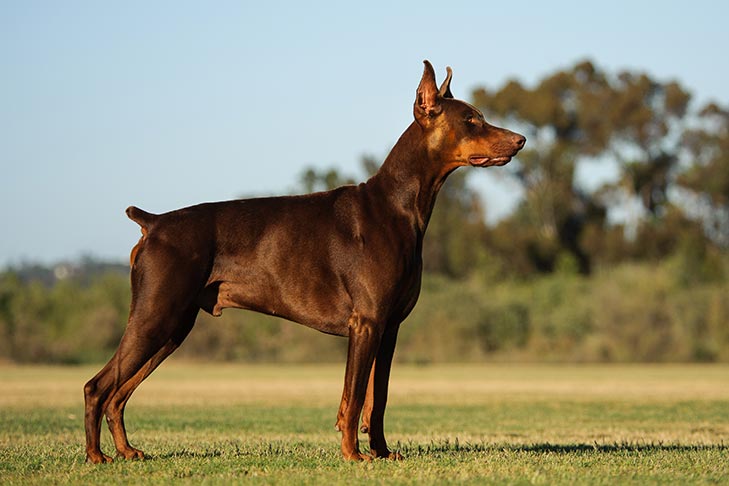
About the Doberman Pinscher
The Doberman Pinscher is a large and powerful breed originally developed in Germany for guarding and protecting property. These impressive dogs stand 26-28 inches tall and weigh between 75-100 pounds, making them formidable protectors with an elegant appearance.
What most owners don't realize is that behind their intimidating exterior lies an incredibly intelligent and loyal companion. Dobermans rank among the most trainable breeds, combining their natural protective instincts with an eagerness to please their families.
Currently ranking 15th in popularity, Doberman Pinschers have earned their reputation as excellent guard dogs while also proving themselves as devoted family pets. Their athletic build and alert expression reflect their working heritage and high energy levels.
Here's the thing about Dobermans - they're not just guard dogs. These versatile athletes excel in various roles from police work to competitive sports, thanks to their exceptional intelligence and physical capabilities.
Energy Level
Very High
Trainability
Excellent
With Children
Excellent
Shedding
Moderate
Grooming
Minimal
Barking
Moderate
Doberman Pinscher Temperament & Personality
Doberman Pinschers are intelligent, loyal, and naturally protective dogs who form strong bonds with their families. While they can be reserved with strangers, they're known for being gentle and patient with children when properly socialized.
🛡️Naturally Protective
Dobermans have an innate guarding instinct that makes them excellent watchdogs. They're naturally alert to their surroundings and will protect their family when needed.
🧠Highly Intelligent
These dogs are quick learners who thrive on mental challenges. Their intelligence makes them highly trainable but also means they need consistent mental stimulation.
❤️Deeply Loyal
Dobermans form incredibly strong bonds with their families and are known for their devotion. They prefer to be close to their people and can develop separation anxiety if left alone too long.
⚡High Energy
With maximum energy scores, Dobermans need plenty of physical activity and mental stimulation. They excel in activities like agility, tracking, and protection sports.
👥Selective Socialization
While excellent with their families, Dobermans can be reserved with strangers and other dogs. Early socialization is crucial for developing well-rounded social skills.
Doberman Pinscher Grooming Needs
Doberman Pinschers are surprisingly low-maintenance when it comes to grooming, with minimal grooming needs despite their moderate shedding levels. Their short, sleek coat requires only basic care with weekly brushing to remove loose hair and maintain their glossy appearance. You'll notice that regular brushing during shedding seasons helps manage the moderate amount of hair they lose. The short answer is that Dobermans are one of the easier large breeds to keep looking their best.
Full Grooming Guide →Doberman Pinscher Health & Lifespan
Doberman Pinschers typically live 10-13 years and are generally healthy dogs, though like many large breeds, they can be prone to certain genetic conditions. Regular veterinary checkups and maintaining a healthy weight are essential for maximizing their lifespan and quality of life.
- ⚠️Dilated CardiomyopathyThis heart condition affects the heart muscle's ability to pump blood effectively and is unfortunately common in Dobermans. Symptoms can include lethargy, difficulty breathing, or collapse. Talk to your vet if you notice any concerning symptoms.
- ⚠️Hip DysplasiaThis genetic condition affects the hip joint's development and can lead to arthritis and mobility issues. Large breeds like Dobermans are particularly susceptible due to their size and rapid growth. Talk to your vet if you notice limping or difficulty rising.
- ⚠️Von Willebrand DiseaseThis inherited bleeding disorder affects the blood's ability to clot properly and can lead to excessive bleeding during surgery or injury. It's relatively common in Dobermans and can be managed with proper veterinary care. Talk to your vet about testing and management options.
- ⚠️Wobbler SyndromeThis spinal condition affects the neck vertebrae and can cause wobbling, weakness, or paralysis in the hind legs. It's more common in large, fast-growing breeds like Dobermans. Talk to your vet if you notice any changes in your dog's gait or coordination.
- ⚠️Bloat (GDV)Gastric dilatation-volvulus is a life-threatening condition where the stomach fills with gas and twists. Deep-chested breeds like Dobermans are at higher risk, especially after eating large meals quickly. Talk to your vet about prevention strategies and emergency signs to watch for.
Feeding Your Doberman Pinscher
Doberman Pinschers need a high-quality diet that supports their large size, muscular build, and very high energy levels. These active dogs typically require 3-4 cups of premium dog food daily, divided into two meals to help prevent bloat. You'll want to choose a formula designed for large breeds with appropriate protein and fat levels to fuel their athletic lifestyle. What most owners don't realize is that Dobermans benefit from elevated feeding bowls and should avoid vigorous exercise immediately after meals.
Full Feeding Guide →Doberman Pinscher Exercise Needs
With maximum energy scores, Doberman Pinschers require substantial daily exercise and mental stimulation to stay happy and well-behaved. These athletic dogs need at least 2 hours of activity daily, including vigorous exercise like running, hiking, or playing fetch. Here's the thing - a tired Doberman is a good Doberman, and without adequate exercise, they can become destructive or develop behavioral issues. Their high trainability makes them excellent candidates for dog sports, agility training, and advanced obedience work.
Training Tips →