
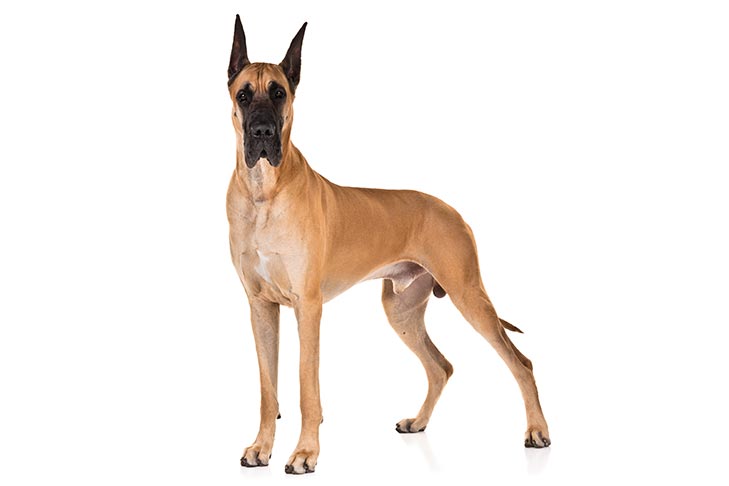
How Much Should a Great Dane Eat?
Great Danes are among the largest dog breeds, weighing between 140-175 pounds when fully grown. Despite their impressive size, they have moderate energy levels, which means their caloric needs are substantial but not excessive for their weight.
Feeding your Great Dane the right amount is crucial for preventing bloat, maintaining healthy growth, and supporting their joints. What most owners don't realize is that overfeeding during puppyhood can actually cause developmental problems in giant breeds.
Great Dane Feeding Chart
| Age | Weight Range | Daily Amount (cups) | Meals/Day |
|---|---|---|---|
| Puppy (2-6 months) | 30-80 lbs | 3-6 cups | 3-4 |
| Puppy (6-12 months) | 80-120 lbs | 6-8 cups | 2-3 |
| Adult (1-7 years) | 140-175 lbs | 8-10 cups | 2 |
| Senior (7+ years) | 140-175 lbs | 7-9 cups | 2 |
Nutritional Needs for Great Danes
Great Danes need a diet with at least 22% protein for adults and 28% for growing puppies. Their moderate energy score of 4 out of 5 means they require quality nutrition without excessive calories that could lead to rapid weight gain.
Fat content should be around 12-15% for adults, with higher levels for active dogs. You'll notice that Great Danes benefit from glucosamine and chondroitin supplements to support their large joints and frame.
Calcium levels are particularly important but shouldn't exceed 1.2% in puppy food. Too much calcium can cause skeletal problems in giant breed puppies.
Best Types of Food for Great Danes
High-quality dry kibble formulated for large or giant breeds is typically the most practical choice for Great Danes. Look for foods with larger kibble size that encourages slower eating and reduces the risk of bloat.
Wet food can be mixed with kibble to add moisture and palatability, but shouldn't make up more than 25% of their diet due to cost and storage considerations. Raw diets can work well for Great Danes, but require careful planning to ensure balanced nutrition.
The short answer is that any food you choose should be specifically formulated for large or giant breeds, as these formulas account for their unique growth patterns and joint health needs.
Recommended Food for Great Danes
Find high-quality large breed dog foods that meet your Great Dane's nutritional needs and support healthy growth.
Feeding Schedule by Life Stage
Great Dane puppies under 6 months should eat 3-4 smaller meals throughout the day to support steady growth and prevent hypoglycemia. Space meals at least 3 hours apart to allow proper digestion.
Adult Great Danes (1-7 years) do best with two meals per day, typically morning and evening. This schedule helps prevent bloat, a serious condition that large, deep-chested breeds are prone to.
Senior Great Danes (7+ years) should continue with two meals daily but may need slightly reduced portions as their metabolism slows. You'll notice that older dogs often prefer their food slightly warmed to enhance aroma and palatability.
Signs of Feeding Issues
Monitor your Great Dane's body condition regularly by feeling for their ribs - you should be able to feel them easily but not see them prominently. A healthy Great Dane should have a visible waist when viewed from above.
Watch for signs of overfeeding like difficulty breathing, reluctance to exercise, or excessive panting. Underfeeding symptoms include visible ribs, dull coat, low energy, and constant food-seeking behavior.
What most owners don't realize is that Great Danes can be prone to food bloat and gastric torsion. If your dog shows signs of restlessness, unsuccessful vomiting attempts, or a distended abdomen after eating, seek emergency veterinary care immediately.