
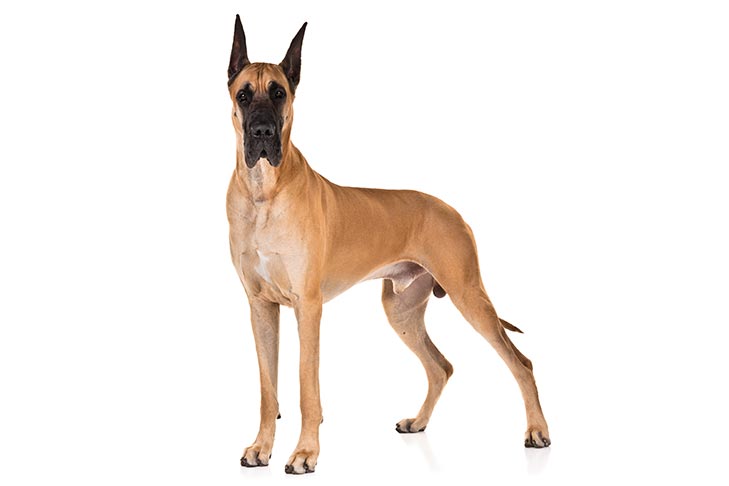
Are Great Danes Easy to Train?
Great Danes score a 3 out of 5 for trainability, placing them in the moderate range. This doesn't mean they're stubborn — it means they need the right approach and consistent guidance.
Their gentle, intelligent nature works in your favor. These dogs were originally bred in Germany for hunting large game, which required them to think independently while still following commands. You'll notice that Great Danes are eager to please but can sometimes be slow to pick up new concepts.
What most owners don't realize is that their size actually impacts training success. A 150-pound dog needs more time to process commands and coordinate movements than smaller breeds. Be patient with physical commands like "sit" or "down" — they're working with a lot more body to manage.
The good news? Once a Great Dane learns something, they typically retain it well. Their loyalty and bond with their family makes them motivated students when training sessions are positive and rewarding.
Best Training Methods for Great Danes
Positive reinforcement is absolutely essential for Great Dane training. These sensitive giants respond poorly to harsh corrections or intimidation tactics. Instead, focus on rewards, praise, and making training sessions enjoyable.
Food motivation works exceptionally well with Great Danes. Use high-value treats that they can't resist — small pieces of cooked chicken, freeze-dried liver, or special training treats. Keep portions small since you'll be giving many rewards during sessions.
Keep training sessions short and sweet. Great Danes have moderate energy levels (scoring 4 out of 5), but their attention span for focused work is typically 10-15 minutes. Two or three short sessions per day are far more effective than one long, exhausting session.
Consistency across all family members is crucial. Great Danes are smart enough to know when different people have different rules. Make sure everyone uses the same commands and rewards system. "Sit" should always mean "sit," never "sit down" or "park it."
Timing is everything with reward-based training. The second your Great Dane performs the desired behavior, mark it with a "yes!" or clicker, then immediately provide the reward. This clear communication helps them understand exactly what earned the treat.
Great Dane Puppy Training Essentials
Start training your Great Dane puppy the moment they come home, typically around 8-10 weeks old. These gentle giants grow incredibly fast, so establishing good habits early prevents problems when they reach their full 140-175 pound adult size.
House training should be your first priority. Great Dane puppies have small bladders relative to their rapid growth, so expect frequent potty breaks — every 2-3 hours initially. Take them out immediately after meals, naps, and play sessions. Most Great Dane puppies are fully house trained by 4-6 months with consistent effort.
Essential first commands for Great Dane puppies:
- "Sit" — Start here since it's foundational for other commands
- "Stay" — Critical for safety with such a large breed
- "Come" — Life-saving recall command
- "Down" — Helps with impulse control and settling
- "Leave it" — Prevents them from eating dangerous items
Socialization is absolutely critical during the 8-16 week window. Great Danes score moderately (3 out of 5) with children and other dogs, but proper early socialization can significantly improve these scores. Expose your puppy to different people, animals, sounds, and environments in positive, controlled ways.
Crate training provides security and aids house training. Choose a crate that will accommodate their adult size (48-54 inches long), but use dividers to make it puppy-appropriate initially.
Common Great Dane Behavior Challenges
Jumping and Pawing
This is the biggest challenge with Great Danes. A friendly paw from a 160-pound dog can easily knock someone over. Start teaching "four paws on the floor" from day one. Never allow jumping, even from cute puppies — what's adorable at 20 pounds becomes dangerous at 150 pounds.
Teach an alternative greeting behavior like "sit" for attention. Practice with family members first, then gradually introduce strangers. Consistency is key — everyone must ignore jumping and only give attention when all four paws are on the ground.
Pulling on Leash
With their high energy score (4 out of 5), Great Danes can be enthusiastic pullers. Their size makes this particularly challenging for handlers. Start leash training early with a properly fitted harness that doesn't restrict their throat.
Use the "be a tree" method — stop moving forward whenever they pull. Only move when the leash is loose. Reward with treats and praise when they walk nicely beside you. Consider a head halter for adult dogs who are strong pullers.
Excessive Barking
Great Danes score a 3 out of 5 for barking, meaning they're moderate barkers who typically have a reason. Their deep, booming bark can be startling and problematic in neighborhoods.
Identify triggers — doorbell, strangers, other dogs, or boredom. Teach a "quiet" command by waiting for a pause in barking, immediately saying "quiet," and rewarding the silence. Never yell at barking, as this often escalates the behavior.
Destructive Behavior
Bored or under-exercised Great Danes can cause significant damage due to their size and strength. Their moderate energy needs must be met through daily walks, play sessions, and mental stimulation.
Provide appropriate outlets: puzzle toys, frozen Kong toys, and supervised chew items sized for large breeds. Ensure they get adequate physical exercise — typically 60-90 minutes daily for adult dogs.
Professional Training for Great Danes
Working with a professional trainer experienced with giant breeds can accelerate your Great Dane's progress and address breed-specific challenges more effectively.